Why Some Triggers Lead to Relapse and Others Don’t
Jul 10, 2026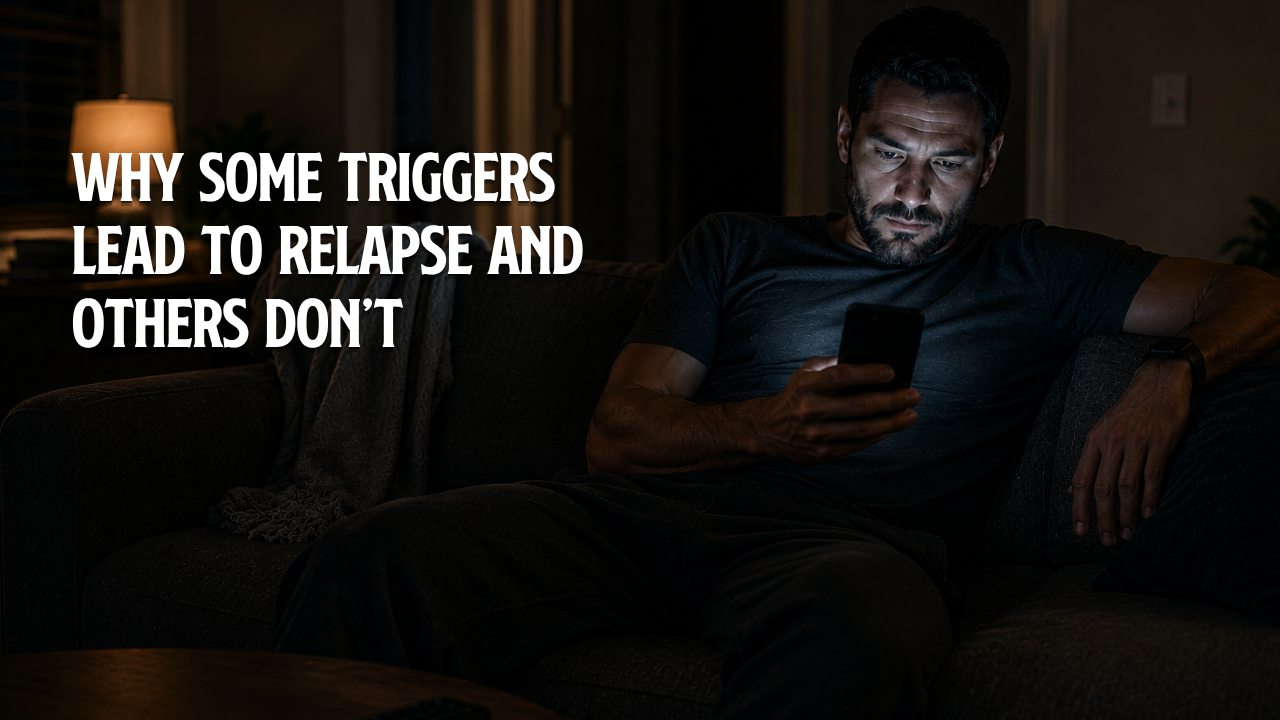
Why Some Triggers Lead to Relapse and Others Don't
Every dad in recovery has asked the same question:
"Why did that trigger get me this time?"
The confusing part is that the exact same trigger can produce completely different results.
One day, a stressful conversation rolls off your back.
Another day, the pressure feels overwhelming.
One day, temptation barely gets your attention.
Another day, it feels impossible to ignore.
Most men assume the trigger is the problem.
But what if the trigger isn't the real issue at all?
What if the trigger is simply revealing something that was already happening beneath the surface?
The Match Isn't the Fire
Imagine trying to start a campfire.
A single match can create a roaring fire under the right conditions.
But take that same match and hold it against wet wood, and nothing happens.
The match isn't what determines the outcome.
The condition of the wood does.
Recovery works the same way.
Many fathers spend years focusing on the match.
They focus on:
- Social media
- Certain TV shows
- Being home alone
- Traveling for work
- Attractive women in public
While those things can absolutely be triggering, they are rarely the entire story.
The better question is:
What conditions existed before the trigger appeared?
What Makes a Trigger Dangerous
Most relapses begin long before pornography enters the picture.
They often start with small things that seem unrelated.
A few nights of poor sleep.
A stressful week at work.
An argument with a spouse.
Feeling disconnected from friends.
Feeling unseen or unappreciated.
Pressure begins to build.
The emotional tank starts running empty.
Then a trigger shows up.
Suddenly the urge feels stronger than normal.
Not because the trigger changed.
Because the conditions changed.
Why Fathers Often Miss the Warning Signs
One of the biggest challenges in recovery is that many warning signs don't feel dramatic.
They're ordinary.
A father might simply feel:
- Irritated
- Exhausted
- Frustrated
- Lonely
- Overwhelmed
Those feelings seem manageable in the moment.
But when they pile up day after day, they create the perfect environment for old coping mechanisms to return.
Pornography often becomes the shortcut to relief.
Not because a man wants pornography itself.
But because he wants the pressure to stop.
That's a critical distinction.
The Real Purpose of Recovery
Many men enter recovery believing the goal is simple:
Stop looking at porn.
While that sounds reasonable, it misses the deeper opportunity.
The real work of recovery is learning how to handle life differently.
Learning how to sit with discomfort.
Learning how to process emotions.
Learning how to respond instead of react.
Learning how to regulate stress without reaching for escape.
This is where lasting porn addiction recovery begins.
Not by controlling every trigger.
But by strengthening the man facing those triggers.
The Same Pattern Shows Up in Fatherhood
This principle becomes obvious when looking at parenting.
Imagine a child leaving a backpack in the middle of the floor.
One day it's mildly annoying.
Another day it sparks an explosion.
What changed?
The backpack didn't.
The child didn't.
The conditions did.
The father may have been carrying stress from work.
Running on little sleep.
Feeling overwhelmed by responsibilities.
The trigger simply exposed what was already happening internally.
The same thing happens with pornography.
The urge isn't created in a vacuum.
It's often connected to emotional pressure that has been building for days or weeks.
Learning to Read the Dashboard
Every vehicle has warning lights.
Recovery does too.
The challenge is learning to notice them before the engine starts smoking.
Common warning lights include:
Fatigue
Everything feels harder when you're exhausted.
Isolation
Shame grows in silence.
Stress
Pressure without an outlet creates vulnerability.
Emotional Disconnection
When a man stops paying attention to what he's feeling, old habits often take over.
Lack of Structure
Recovery thrives in consistency.
Chaos creates opportunity for old patterns to return.
These warning signs aren't failures.
They're information.
They tell you where attention is needed.
Why Recovery Habits Matter
This is where daily recovery practices become so important.
Not because they magically eliminate temptation.
But because they strengthen your ability to respond to life.
Practices like:
- Journaling
- Exercise
- Meditation
- Personal growth reading
- Accountability
- Brotherhood
help create awareness before a crisis develops.
They help fathers notice when conditions are becoming dangerous.
And awareness creates options.
Without awareness, most reactions happen on autopilot.
With awareness, a man can make a different choice.
Breaking the Cycle Starts Earlier Than You Think
Most men focus on what happens during temptation.
The strongest recovery work happens before temptation arrives.
It happens when a father recognizes:
"I'm more stressed than usual."
"I'm carrying a lot right now."
"My emotions are running hot."
"I'm starting to disconnect."
Those moments matter.
Because they provide an opportunity to respond before the pressure reaches a breaking point.
This is where emotional regulation becomes one of the most important skills a father can develop.
Not just for recovery.
For marriage.
For parenting.
For leadership.
For life.
The Fathers Who Build Lasting Freedom Think Differently
The fathers who experience lasting freedom don't spend all their energy asking:
"How do I avoid every trigger?"
Instead, they ask:
"How do I strengthen myself before the trigger arrives?"
That shift changes everything.
Because recovery stops being about fear.
And starts becoming about growth.
It becomes less about avoiding pornography and more about becoming a stronger, more present man.
A better husband.
A better father.
A man capable of navigating life's challenges without needing to escape them.
That's where real freedom is found.