One Rep at a Time: Strength Training as a Recovery Practice
Feb 16, 2026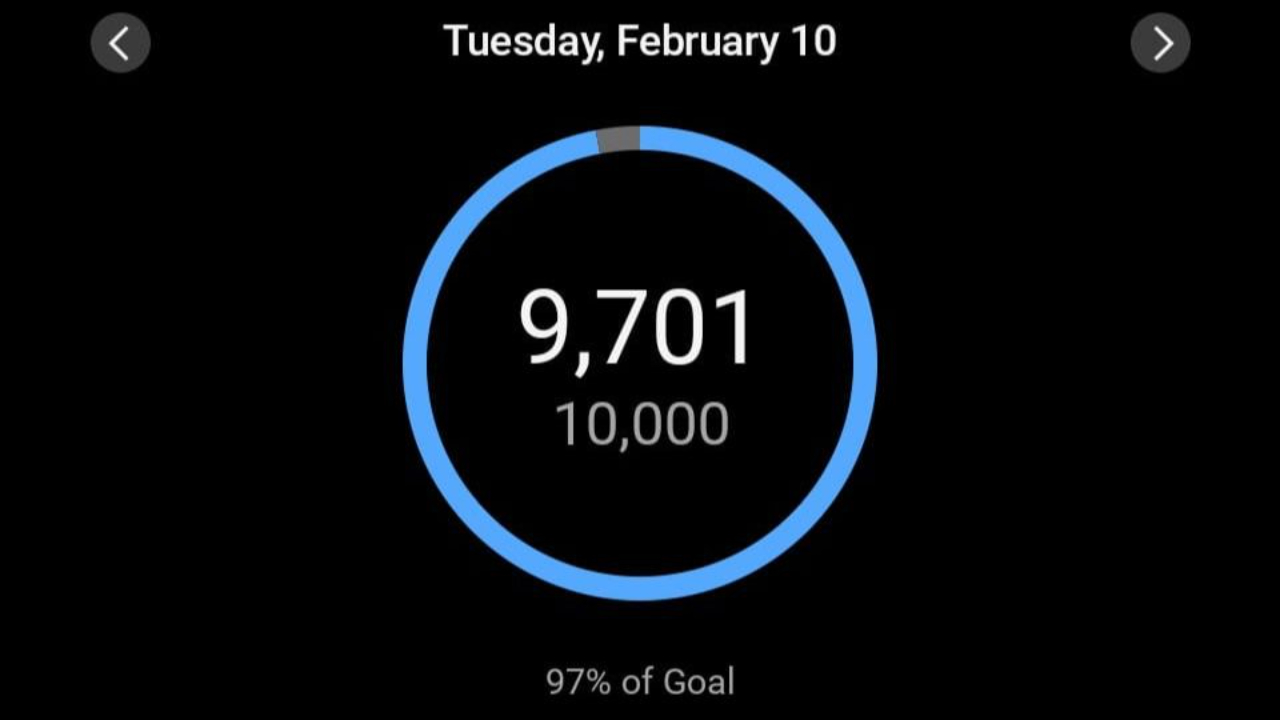
Some days, recovery lessons don’t come from a journal entry or a “big breakthrough” moment.
They come from missing 300 steps. (299 to be exact...)
I was talking with my buddy Matt on the Recovered Dad Podcast recently, and we got into this conversation about the parallels between recovery and fitness—especially strength training. It started with weather (because we’re dads and that’s what we do). He’s looking out at a gray winter day in Pennsylvania, and I’m down here in South Carolina like, “It’s drizzly… but it’s 70 degrees.” Not a terrible trade.
But then we went somewhere deeper: What does it mean to show up physically as a father—and how does that connect to recovery?
My two numbers: “uptime” and “steps”
I’m a numbers guy. Not because numbers save you—but because they reveal patterns.
1) Recovery “uptime”
In my habit tracking app, one of the habits I track is sobriety: Have I stayed away from porn? Over the past three-plus years, I’ve had some resets. I’m not proud of those moments… but I’m not hiding them either.
Here’s what I am proud of:
Over that span, I’m sitting at 99.7% uptime.
I call it uptime because it reminds me of website hosting guarantees. Nobody promises 100% uptime, because all it takes is one outage and suddenly the claim falls apart. Recovery has felt similar. I’m not chasing perfection—I’m building consistency.
2) Steps (and a streak I broke)
I wear a Garmin, and last year (2025) I hit over 5,000,000 steps. This year my goal is 6,000,000.
I also had a streak going: 55 days in a row of at least 10,000 steps.
And then… last night… I checked my tracker and thought, “I only need 300 steps.” Then I went upstairs, the bedtime routine took over, and my brain went into autopilot.
This morning I realized: I missed it.
Streak broken.
And in that moment, the real question wasn’t “How could you be so dumb?” The real question was:
What do I do next?
The all-or-nothing trap (the place so many dads get stuck)
This is where fitness and recovery are basically cousins.
Because the all-or-nothing trap whispers stuff like:
-
“Well, you ruined it… so why bother?”
-
“You can’t be perfect, so just quit.”
-
“Since you messed up once, you might as well spiral.”
That voice shows up in the gym.
And it shows up in recovery.
But here’s what Matt said that landed hard:
Sobriety is quantitative. Recovery is cumulative.
Sobriety is the number on the tracker.
Recovery is the man you’re becoming.
It’s the same with strength training. If you miss one day, you don’t suddenly lose years of muscle and progress. You don’t wake up weaker overnight. The work you’ve done is still there. You didn’t “lose everything.”
So why do we treat recovery like one bad day means the whole story is over?
You didn’t lose the whole staircase because you missed one step.
My one rule in the gym: live to lift another day
I’m 45.
At 25, you can do something stupid in the gym and bounce back like a cartoon character.
At 45, you do something stupid and you’re out for six weeks.
So I have one hard rule when I lift:
Live to lift another day.
That means:
-
I don’t lift 100% if I don’t feel 100%.
-
I focus on technique and staying healthy.
-
I leave some in the tank so I can show up again tomorrow.
Now here’s the punchline:
That rule applies to emotional strength too.
If I’m running on fumes, not sleeping, not doing my “core four,” not connected to community—then I’m more likely to get hurt emotionally. I’m more likely to snap. More likely to numb. More likely to drift into old patterns.
Recovery isn’t about heroic intensity. It’s about sustainable consistency.
Choosing your hard (and why the hard reps matter)
There’s a reason it’s called working out.
Because it’s work.
There are lifts I genuinely don’t enjoy. Those final reps when your arms are burning? That moment where everything in you wants to quit?
Those reps matter.
And the parallel is painfully obvious: the moments in recovery when I don’t want to sit with my emotions… those are the reps that matter too.
Because porn was the easy button for me for a long time. A couple clicks, a dopamine hit, artificial connection, fake relief.
Doing the work now—real connection with my wife, regulating my nervous system, facing stress without numbing—yeah… it’s hard.
But the benefits?
I wouldn’t trade them. I would not go back.
There’s an old idea I love:
When you live life the easy way, life is hard.
When you live life the hard way, life is easy.
Choosing the hard thing now builds the capacity to handle life later.
A real-life rep: my daughter, a timer, and my emotions flaring up
Let me make this concrete.
Bedtime routine at my house can be… an endurance event.
My 10-year-old daughter? Once she starts the routine, it’s basically two hours until tuck-in. And the other night, we were trying to keep things moving. Earlier that day, we’d even been joking about motivation—she told us that timers help her get moving.
So I said, “Hey Google, set a 30-minute timer.”
She starts moving. Great. Everything is on track.
Then my wife says something like, “This is interesting, you’re moving before you know the consequence.”
And suddenly my daughter goes, “Oh yeah… what is the consequence?”
And I felt cornered. Like everything was fine, and now I’m being challenged.
And my emotions hit me fast.
I snapped. I barked out something sharp.
Now—my daughter didn’t fully hear it, but I heard it. And it sat in my chest like a rock.
And there it was again: another rep.
Not in the gym.
In my character.
Because the next question wasn’t “Did I mess up?”
It was:
Do I repair? Do I apologize?
Or do I defend myself and wait for them to come to me?
If I’m honest, sometimes it feels easier to tell myself, “I’ll wake up at 5am and go run.”
It can feel harder to go upstairs and say, “Hey. I didn’t handle that well. I’m sorry.”
But that’s recovery work.
That’s the rep.
One rep at a time
So here’s what I’m taking with me:
-
You build 100 days of sobriety one day at a time.
-
You build 10,000 steps one step at a time.
-
You build a recovered dad life one rep at a time.
You don’t need perfect.
You need direction.
And if you missed your 300 steps yesterday?
Cool.
Get up today and walk.
If you missed your emotional reps yesterday?
Cool.
Repair today. Reach out today. Get back into your practices today.
Choose your hard—today.
And then do it again tomorrow.