Emotional Weightlifting: The Skill That Changes Everything
Jan 23, 2026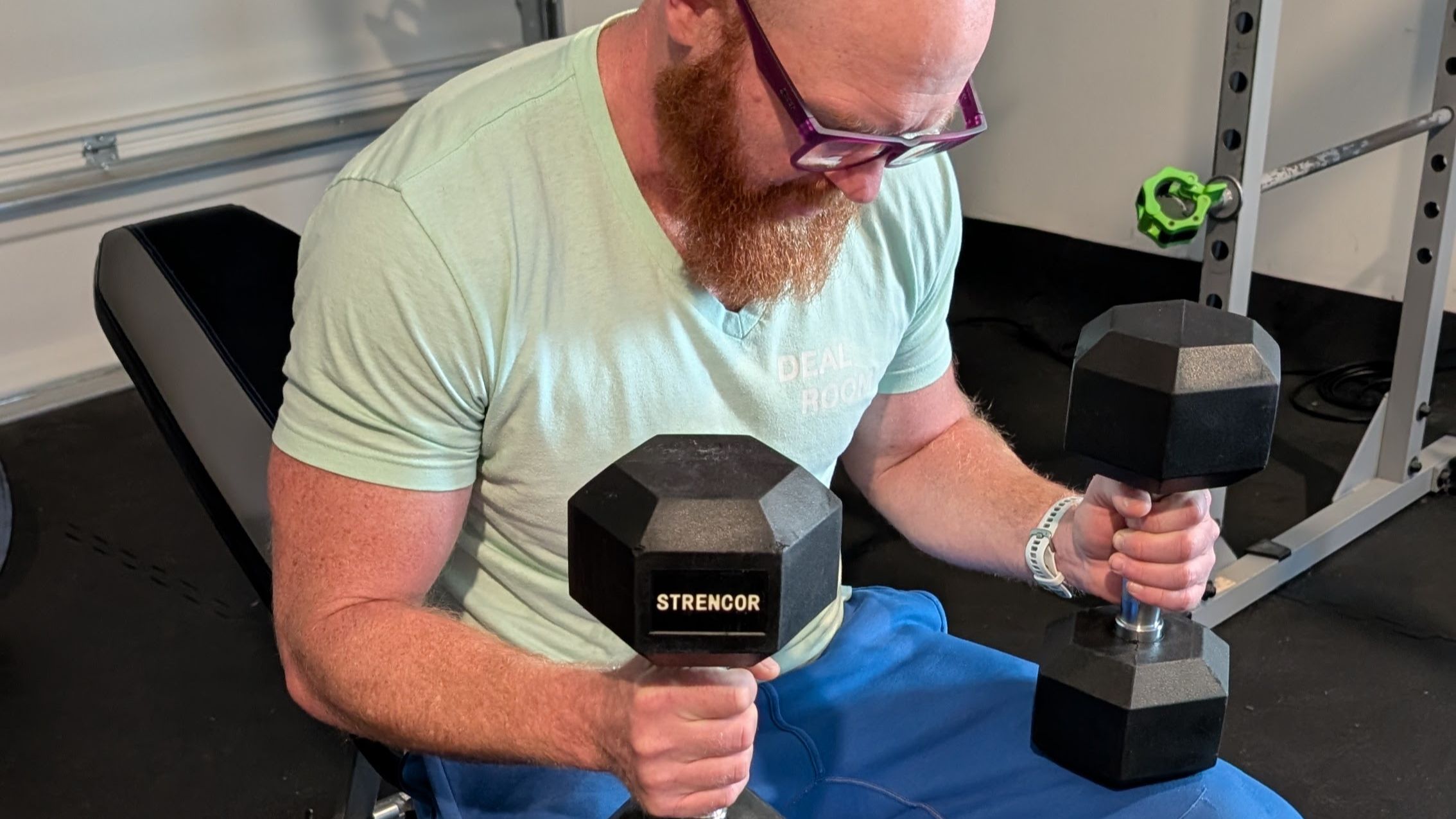
At the time I’m writing this, we’re all bracing for that “blizzard bomb” headed up the East Coast. From Pennsylvania down through the Carolinas and over toward Atlanta.
Everybody’s doing the same thing: stocking up, hunkering down, and trying to stay warm.
And weirdly… that’s the perfect backdrop for what’s been on my mind lately.
Because there’s a kind of storm that doesn’t show up on radar.
It shows up in your chest. In your jaw. In your tone of voice. In that split-second moment where you either respond like the father you want to be… or you react like the father you promised yourself you’d never become.
I’ve been calling it emotional weightlifting.
The problem isn’t pxrn. It’s pain.
If you’ve followed us with the podcast or this blog for any length of time, you’ve heard me say this:
You don’t have a pxrn problem.
You have a pain problem.
Pxrn just happens to be the pill you reach for when the pain shows up.
And honestly, this applies way beyond pxrn.
Some guys reach for pxrn.
Some reach for rage.
Some reach for alcohol.
Some reach for food.
Some reach for nicotine.
Some reach for scrolling, Netflix, work—anything that helps you not feel what you’re feeling.
The trap is that these coping mechanisms almost work. They give a moment of relief. Just enough to convince your brain, “Yeah, do that again.”
And then the pain comes back—with a vengeance.
So if we’re serious about recovery (from pxrn or anything else), the real goal is simple:
Build the capacity to sit with discomfort without reacting.
That’s the whole game.
Capacity is built… not discovered
When I first joined Liberation Boot Camp, one of the daily practices was exercise—part of what we call the Core Four.
And I remember thinking, Exercise? Easy. Done. I’m good.
At that point in my life, I’d run marathons. I’d been training for endurance events. I lifted. I knew how to push my body.
But what I didn’t realize was this:
I had trained my physical capacity…
…and basically ignored my emotional capacity.
And the two work the same way.
You don’t wake up one day and magically bench press 225.
You start with the bar.
You add weight over time.
You build capacity through reps.
Emotional strength works the same way.
Except most dads try to “lift heavy” emotionally without ever training.
We try to practice patience for the first time while our kid is melting down.
We try to practice restraint for the first time while we’re exhausted and late.
We try to practice calm for the first time when our marriage is already tense.
That’s like walking into a gym, loading up the bar, and hoping your shoulders figure it out.
That’s not training. That’s gambling.
Fatherhood will find your weak spots
I used to think being a good dad meant being “in control.”
But early fatherhood exposed something in me that scared me:
I could fly into rage over tiny things.
I remember my son in a high chair, dropping a spoon off the side—just letting it fall.
And inside my head, I wasn’t thinking, He’s a baby.
I was thinking:
“This is disobedience.”
“This is rebellion.”
“This is not okay.”
I even remember wanting a wooden spoon like some kind of training tool—like you train a dog.
And I’m not proud of that. But I’m saying it out loud because I know I’m not the only one.
Here’s what I understand now:
My son wasn’t rebelling.
He was learning gravity.
He was doing what kids do—experimenting with the world.
He drops it once: It falls.
He drops it again: It falls again.
He tries food on it: Still falls.
He tries a cup: Falls too.
And I’m sitting there, decades into life, acting like gravity should be obvious to him… because it’s obvious to me.
That’s the curse of adulthood sometimes. We forget what it’s like not to know.
But the bigger point is this:
Those moments create emotional pain—frustration, helplessness, overwhelm, fear, stress.
And if you haven’t trained emotional capacity, you’ll treat that pain like an emergency.
You’ll react.
And as dads, our reactions are not harmless.
A grown man without emotional skill is dangerous
I’m going to say this as plainly as I can:
A grown man who can’t sit with uncomfortable emotion is one of the most dangerous forces on earth.
Not because he’s evil.
But because he’s untrained.
Because he reacts.
And reactions compound.
The other day, I got a call from a property manager I work with in commercial real estate. She needed to talk immediately—there had been a shooting at one of our apartment complexes.
Two adult brothers. Visiting their mom. Emotions escalated. It got out of control. One of them pulled a gun and fired.
Lives shattered in seconds.
And all I could think was:
This is what happens when pain rises… and there’s no capacity to hold it.
That story broke my heart—not just because of what happened, but because I recognized the pattern.
It’s the same pattern behind pxrn.
It’s the same pattern behind rage.
It’s the same pattern behind addiction.
Pain rises → capacity is too low → reaction takes over.
And if we lose control around our kids—emotionally, verbally, physically—the collateral damage is massive.
Recovery isn’t just for you.
Recovery protects your family from the most dangerous person in their life:
a father who hasn’t learned how to regulate himself.
Emotional weightlifting is reps, not theory
So what does “emotional weightlifting” actually look like?
Here’s the insight that changed everything for me:
You don’t practice when the stakes are high.
You practice when the stakes are low.
If you want to respond calmly to your four-year-old when it’s time to stop playing and start cleaning… that’s not the time to “learn calm.”
That’s game time.
Practice happens before game time.
For me, the biggest training tool has been meditation.
Not because I’m trying to be some monk.
Because meditation is reps.
It’s sitting still long enough to notice what’s happening inside you:
-
“This is the thought.”
-
“This is the emotion.”
-
“This is the story my brain is writing.”
-
“But what are the facts?”
It’s learning to pause.
It’s learning to create space between a trigger and a response.
And some days, I’m not great at it.
Some days I can do ten minutes.
Some days I’ve got thirty seconds.
But thirty seconds counts.
Because that’s a rep.
The nicotine test
I’ve been living this lesson in a different way recently too.
I decided to quit nicotine—fully. No gum, no pouches, none of it.
When I checked my tracker, I was sixteen days clean.
And the first week?
Painful.
Not “I’m annoyed” painful.
I mean withdrawal painful. Emotionally wired. Restless. Irritable. That buzzing discomfort that makes your brain scream, “Just do the thing!”
And I noticed something important:
I don’t think about nicotine when I’m having fun.
I think about nicotine when I’m stressed.
So instead of reaching for the old pill, I had to ask better questions:
-
“What’s actually going on right now?”
-
“What do I need?”
-
“Am I hungry, angry, lonely, tired?”
-
“Do I need a nap?”
-
“Do I need connection—with my wife, my kids, my people?”
That’s emotional weightlifting in real time.
It’s not heroic.
It’s honest.
Responding is freedom
At the end of the day, this is the work:
Learning to respond instead of react.
This is what builds freedom from porn.
This is what builds safety with your wife.
This is what builds connection with your kids.
This is what builds a better version of you.
When I joined Boot Camp, all I wanted was porn out of my life.
What I found was growth at every level.
And if you’re a dad reading this, here’s what I want you to hear:
Your family is worth the work.
Your kids are worth the reps.
Your marriage is worth the training.
This life isn’t a dress rehearsal.
So if you’re hunkering down for a snowstorm this week, maybe take five minutes and do some reps on the inside too.
Pause.
Breathe.
Notice.
Name what’s happening.
Choose your response.
That’s strength.
That’s stability.
That’s emotional weightlifting.
And it changes everything.